When the Sky Picked the Name: British Football's Weather-Born Nicknames
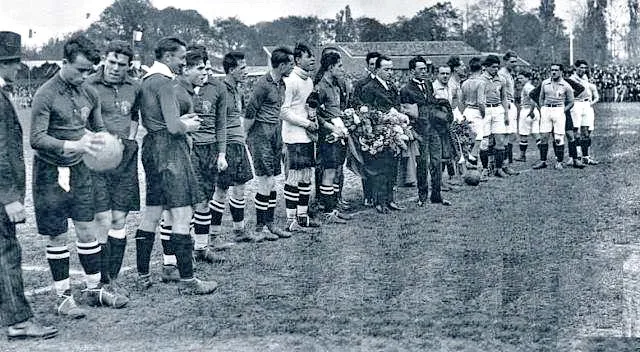
Photo: Unknown authorUnknown author, Public domain, via Wikimedia Commons
British football has one sponsor it has never been able to sack: the weather. It has produced more nicknames than any kit launch, more folklore than any marketing campaign, and more shared suffering than a decade of relegation battles.
What follows is affectionate rather than scientific. But there is a real pattern here — the worse the conditions, the better the story. Nobody remembers a mild afternoon in August. Everybody remembers the day the ball went out for a throw-in and came back.
Sunny Scunny and the Rainy City
Start with the joke names, because they are the most honest. Scunthorpe United supporters have long referred to their own patch as Sunny Scunny, a nickname that has never once been verified by a forecast and is all the better for it. Glanford Park, exposed to whatever the Lincolnshire sky feels like sending, is not a place where you carry a sun hat out of habit.
Manchester, meanwhile, has been 'the Rainy City' for as long as anyone can remember. Nobody official decided this. It simply accumulated, the way puddles do, and it now sits alongside the city's musical heritage as a fact of life. Note the direction of travel: both names were made by the people standing in it, not by anyone trying to sell a ticket.
Cold Blow Lane and the grounds named for the gale
Millwall's old home was reached along Cold Blow Lane, and the phrase became shorthand for the club itself — a name that sounds like a weather warning and a welcome at the same time. The Den moved in 1993, but the lane survives in song, which is where all the best ground names end up.
Hartlepool's Monkey Hangers is a legend rather than a weather report, but the fog does a lot of work in the telling: the story goes that during the Napoleonic wars a shipwrecked monkey was strung up by locals who took it for a French spy. Whether or not the mist was a factor, the town has cheerfully claimed the insult and built a whole identity on it.
And no list is complete without Fog on the Tyne. Lindisfarne's 1972 song became an anthem, and Paul Gascoigne's version with the band in 1990 cemented it. It is a weather lyric that turned into a football lyric, which is about as Geordie as it gets.
The Baseball Ground and the art of the mudbath
Derby County's Baseball Ground was named for the baseball played there in the 1890s, but it earned its reputation in the 1970s as the muddiest pitch in the country. Brian Clough's side were brilliant; the surface was a swamp. Visiting teams arrived expecting a game and got an endurance event. The ground has gone, the legend hasn't.
Wembley had a similar relationship with water. With the Horse of the Year Show sharing the calendar, the famous pitch spent decades being described as a bog, and the 1960s and 1970s produced plenty of finals that were more about stamina than style.
Terrace vocabulary grew out of all this. A ploughed field. A cabbage patch. A quagmire. Every supporter over 40 has used all three about their own club's surface, usually in the same sentence.
1963, the Pools Panel and the winter that stopped football
The Big Freeze of 1962-63 is the great weather story of the British game. Fixtures vanished for weeks. The FA Cup third round was postponed en masse. Pitches were unplayable, transport was chaos, and the entire Saturday rhythm of the country stuttered.
Out of that came one of the oddest institutions in sport: the Pools Panel. With no results to draw on, a group of former players and referees were convened to 'play' the postponed matches on paper so that the football pools could still pay out. Figures like Tommy Lawton and Ted Drake sat around a table deciding imaginary scorelines. It is the only time in history that a weather forecast has directly created a panel of experts.
The orange ball, the snood and the shorts brigade
The little rituals of a British winter are their own folklore. The orange ball appearing from the kit bag like a firework. The pre-match pitch inspection. The announcement that the referee will inspect again at one o'clock. The distant sight of a steward with a pitchfork.
The clothing has its own history. Football's authorities banned snoods in 2011, apparently on safety grounds, which turned a neck warmer into a national debate for a fortnight. Outfield players wearing gloves was once treated as a moral failing. And in the away end there is always, at Boundary Park in February, a man in a short-sleeved shirt, insisting he's warm. Oldham's ground is perennially nominated as the coldest in the league, and that man is at every single game.
There were also the power-cut years. During the three-day week of the early 1970s, floodlights were restricted and kick-offs shifted, and a generation of fans learned that a football match is a thing the state can technically switch off.
Why rubbish weather makes better stories
Here is the thing about a sunny 3-0 win: it evaporates. You barely remember the goals a month later. But a 0-0 in a gale, with the ball refusing to stay on the pitch, the away end soaked through and a stranger's flask of tea doing the rounds — that one gets retold for thirty years.
Bad conditions are a membership scheme. Everyone who was there is in it, and everyone who wasn't wishes they had been. That is why the weather keeps producing names, chants and legends that no club shop could ever design.
The rain, in other words, is doing the club's cultural work for free. Long may it lash down.