The 2026 World Cup Nickname Audit: What's Stuck, What's Wobbling and What We've Already Binned
Every World Cup leaves behind a nickname or two. Sometimes they stick for decades. Sometimes they last exactly as long as the highlights montage. This summer's tournament, spread across the United States, Canada and Mexico with an expanded 48-team field, gave us more matches, more commentary minutes and more group-chat material than any World Cup in history. Statistically speaking, it was always going to churn out more nicknames than usual.
Six months on, the dust has settled and the phone-ins have moved on. Time for an audit. I'm not relitigating the football here - that's someone else's column - just taking stock of the words we picked up in June and July and asking which ones are still doing a job in November.
A tournament built to manufacture nicknames
Forty-eight teams means a lot of players nobody in Britain had watched closely before, and broadcasters need shorthand fast. That pressure produces two very different kinds of name: the ones that grow organically out of a terrace and the ones that get pushed at you by a rights holder hoping for a hashtag.
Only one of those categories tends to survive the autumn.
The keepers: short, silly and singable
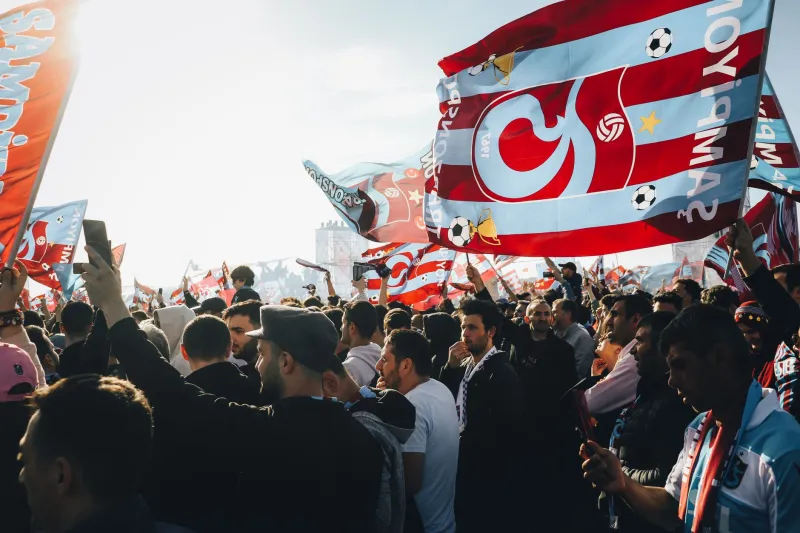
The names that have genuinely embedded all share one quality - you can shout them. The tournament's breakout forward picked up a two-syllable moniker somewhere in the group stage and it has now colonised away ends up and down the country. It fits the rhythm of a chant, it needs no explanation, and it is mildly ridiculous, which is the highest compliment you can pay a football nickname.
Same story for the goalkeeper who became a cult figure after one absurd save. His nickname is barely a word. It's more of a noise. That's exactly why it works.
Notice what these have in common: nobody organised them. They arrived sideways, through a group chat or a pub or a fan account, and by the time broadcasters caught up the terraces had already moved on to something else.
The accidental ones
The best nickname of the summer, in my view, came from a celebration rather than a performance. A player did something daft with his hands after scoring, the crowd copied it, and within a fortnight the gesture had a name attached. It has nothing to do with football and everything to do with why people go.
These are the ones that age best, because they aren't trying to mean anything. They're just a shared joke with a very large audience.
The ones that never stood a chance
Now the bin. Every major tournament arrives with a batch of nicknames that feel like they've been through a legal department before they reached your ear. Usually it's a single word, usually capitalised in the graphics, usually paired with a sponsor sting. They never last, because a nickname is something fans do to a player, not something a player is given by a broadcaster.
There's also a particular kind of failed nickname: the one that's technically accurate but too long. Anything requiring three syllables and a possessive is dead on arrival. It cannot be chanted, therefore it cannot survive.
What past tournaments tell us
Look back and the pattern is obvious.
Gazza came out of 1990 and swallowed the man entirely - the nickname is now the historical figure. Zizou did the same in 1998, and Il Fenomeno did it for a generation of fans who couldn't spell the real name. Going further back, Panenka turned one cheeky penalty in 1976 into a permanent piece of vocabulary, and the Hand of God has outlived every attempt to argue about it.
Then look at 1996, where the most enduring phrase wasn't a player's nickname at all but three words from a song. It did the same job: it gave a crowd something to say together.
The lesson across five decades is consistent. Nicknames survive when they're short, when they're attached to a single vivid moment, when they belong to the stands rather than the studio, and when they're just slightly daft.
The audit
Definitely stuck: the two-syllable striker. Already in chants, already outliving the tournament, probably still around in 2030.
Stuck, to my surprise: the goalkeeper noise. I thought it was a one-week meme in July. It is now a thing people shout at club matches, which is the real test.
Wobbling: the group-stage phrases coined by commentary teams. Some have hung on in phone-ins, but nobody sings them, and unsung nicknames have a shelf life measured in months.
Already binned: anything with a hashtag in it. Anything longer than four syllables. Anything that arrived with an official graphic.
What makes a name stick
Five rules, near enough. Keep it under three syllables. Make it work without explanation. Attach it to a moment people remember. Let the crowd own it, not the rights holder. And never take it too seriously - the moment a nickname sounds self-important, it's finished.
The 2026 crop will thin out over the next couple of seasons, as it always does. Most of what we heard this summer will be gone by the next qualifying campaign. But one or two have made the leap from tournament coverage to the terraces, and those will still be getting sung in a decade, entirely unbothered about who won what.