The Flag Says It, the Terrace Doesn't: Nicknames That Never Learn to Sing
Photo: Hikaru Iwasaki, Public domain, via Wikimedia Commons
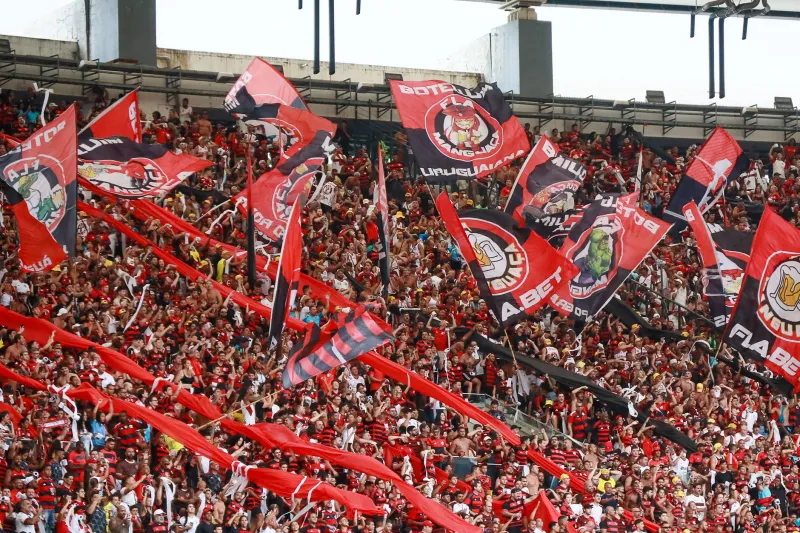
Every so often, a nickname turns up at a football ground that nobody sings. It is not in the programme, it has never been near a club shop mug, and if you ask the person holding the flag where it came from, you get a shrug and a story about a minibus in 1998. It exists because somebody painted it on a bedsheet, tied it to a pole and stood at the back of an away end. That is enough. In 2026, with printed banners and fire-retardant poles, the bedsheet has gone professional, but the principle is the same: some names are made to be seen, not sung.
The bedsheet was the first printing press
The 1970s and 1980s gave British football the homemade banner as we know it: old sheets, marker pens, a bit of rope and a refusal to let the rain ruin the lettering. These were not corporate messages. They were portable identity. A name on a flag could travel to an away ground, get tied to a barrier and say something about the people behind it without a single verse being written.
That is where a lot of one-off nicknames were born. Not in a fanzine, not on the back page, but in a kitchen at 11pm the night before a trip. The flag gave the name a home. The terrace never gave it a tune.
A name with no chorus
Chants are democratic in a very specific way. They need vowel sounds that carry, a rhythm that survives a few pints and a line that people can pick up after hearing it twice. A flag has different demands. It can be wordy, local, ironic or downright baffling. It only has to work for the people standing near it.
That is why some nicknames stay on the banner. They are too long for a song, too niche for the away end, or too closely tied to one group of mates. A chant is a pub singalong; a banner is a pub quiz answer. One wants repetition, the other rewards a closer look.
There is also the question of ownership. A song belongs to everyone who joins in. A flag belongs to the person who made it, carried it and argued with a steward about where it could go. That makes the nickname feel private, even when it is displayed in public. It is a name with a gatekeeper.
The postcode, the pub and the private joke
Flag nicknames tend to fall into a few familiar shapes. There is the postcode name, the one that tells you exactly which estate or road the group came from. There is the pub or works name, carrying a bit of local history that never made it into the club handbook. There is the player name with an extra syllable, the pun that was funny once and now has a pole. And there is the self-deprecating name, the one that says: we know what we are, and we are not asking the marketing department to approve it.
What a flag says about a club's self-image is often more honest than the official version. A banner can be municipal, sentimental, sarcastic or proudly small-time. It can call a club by a name that no commentator would use, because it is written for the people who already understand the reference. That is the quiet power of the flag nickname: it does not need to travel beyond the stand to be true.
From marker pen to print shop
By 2026, the away-end display has grown up. Supports have design software, online print shops and groups who coordinate where the banners go. The best displays look sharp, the lettering is level, and the fire regulations have been read. But the wording has not necessarily become more chant-friendly. If anything, the professional banner has made the one-off nickname more common, because it is easier to make a flag that looks good in a photo and harder to pretend every name needs a song.
There is a trade-off. A printed banner can be seen across the ground and shared online within minutes. A bedsheet had a wobble to it, a smell of rain and the chance that the ink would run. Both do the same job, though: they put a name in front of people who already know what it means. The nickname does not have to be belted out from the back. It just has to be there when the teams come out.
What happens when the flag goes home
Some flag nicknames vanish when the banner comes down. Without a song, there is nothing to carry them to the next generation. They survive in photos, in half-remembered stories and in the peculiar archive of terrace lore. Others hang around for decades, appearing at the same ground, on the same pole, long after the original group has split up.
That is the strange life of the flag-only nickname. It is not official, not sung and not particularly bothered about being understood. It is a name that lives in cloth and paint, doing the oldest job in football: telling everyone nearby exactly who you are.