Stapled Together, Sung Forever: The Fanzine Names That Beat the Press to It

There is a particular smell to a football fanzine. Toner, mostly, plus whatever the seller had for breakfast. Forty pence, two staples, a cover drawn by someone's mate who could actually draw, and inside it a nickname for the club's third-choice centre-half that would follow him around for the rest of his career.
The press never liked admitting it, but a fair chunk of the language you hear on a Saturday was drafted in a bedroom first. Fanzines were where the game got named. Not officially, not permanently, and certainly not politely — but they got there first.
Forty Pence and a Roneo Machine
When Saturday Comes turned up in 1986 and proved that supporters could write about football with wit and without a press box, and the photocopier did the rest. By the early nineties there were hundreds of them: The Square Ball at Leeds, United We Stand and Red Issue in Manchester, Red All Over The Land on Merseyside, When Skies Are Grey at Everton, A Love Supreme in Sunderland, True Faith up at Newcastle. Different clubs, same production line — a typewriter, a willing printer, and a bloke with a bin bag full of them standing by the away end.
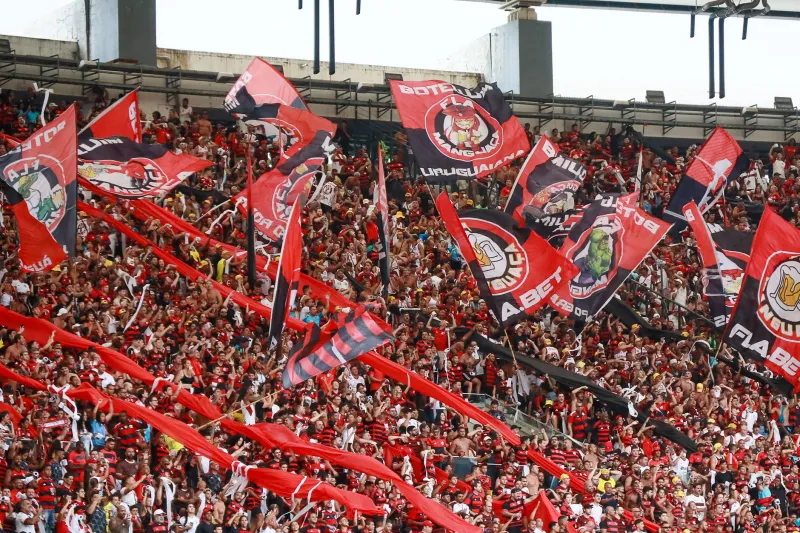
Circulations were tiny by any commercial measure. A thousand copies was a triumph. But a thousand copies read by the thousand most obsessive people at a club is a strange kind of influence, because those are precisely the people who start chants.
The Three Tests Every Fanzine Nickname Has to Pass
Not every joke survived the journey from page eight to the stand, and the ones that did tended to pass the same three checks.
The first is the shout test. If a name can't be bellowed by a bloke with a sore throat in the eighty-ninth minute, it's a caption, not a nickname. Three syllables is pushing it. Four is a paragraph.
The second is the joke test — it has to be funny the first time and not actively annoying the fortieth, because it will be said roughly nine hundred times a season. Puns age badly. So do surnames welded to current affairs, which is why a decade's worth of political gags now sit in landfill alongside the paper they were printed on.
The third, and the one nobody can control, is the subject's face. A nickname lives or dies on whether the player grins when he hears it. Some do. Some drop their shoulders and pretend not to. And a blessed few lean into it so completely that the original joke becomes almost affectionate — the terrace's oldest trick, taking a weapon and handing it back as a gift.
When the Back Pages Nick Your Joke
Here is the awkward bit of fanzine lore: attribution is a contact sport. Ask six supporters who coined a given name and you'll get six answers and at least two grudges.
What is safe to say is that the relationship ran one way for years — a name would circulate in print and on the terraces, a tabloid would notice, print it in 48-point type, and then the club shop would try to sell it back to you on a mug. The fanzine got nothing but the satisfaction of being right. Occasionally the borrowing was generous enough that the name simply became the truth, at which point nobody remembered the source anyway. That's the deal with nicknames. They belong to whoever says them last.
The reverse also happened. Names the papers pushed hard — the ones with a marketing department behind them — bounced off the stands like a shot off the crossbar. If it arrives ready-made, wrapped in a headline, it's already dead. Football crowds can smell a slogan.
The Ones That Outlived the Print Run
What's striking in 2026 is how many fanzine-era names are still in service while the magazines that carried them are gone or gone quarterly.
Some survive as pure noise — a vowel sound with a surname attached, no longer meaning anything, kept alive because it fits the tune. Others have become shorthand the broadcasters use without knowing where it came from, which is the closest thing to a knighthood this culture offers. A few have been quietly retired by the same people who invented them, usually because the player turned out to be a decent sort and the joke curdled.
The ones that die fastest, oddly, are the cruellest. Genuinely sharp, witty cruelty can last forever, but lazy cruelty has a short shelf life — a comic who only does one joke.
What Replaces the Photocopier in 2026
The fanzine didn't vanish so much as dissolve. The Square Ball is a podcast and a website now. True Faith is a newsletter. Every club has three WhatsApp groups and a Substack doing the job a staple gun used to do.
The upside is reach: a decent nickname can travel the length of a country in an afternoon. The downside is that scarcity was the whole trick. A name shared by a thousand obsessives had time to be argued over, rejected, sharpened, tried out at an away game in February, and only then adopted. A name shared by forty thousand accounts on the same evening gets used up instantly and forgotten by Thursday.
Which is the real reason fanzine nicknames stuck. Not the printing. The lag. There was a gap between invention and adoption, and in that gap the good ones proved themselves.
The Last Page Is Always the Best Page
There's a lesson in there for anyone doing this now, whether it's a newsletter, a group chat or a matchday podcast. The letters page was the original focus group. A gag went out to a thousand readers who had nothing better to do than pick holes in it, and if it came back a fortnight later still standing, it had a chance.
So next time a name drifts down from the stands and settles on a player like it was always there, spare a thought for the person who typed it out at half eleven at night, in a font that never quite worked, with one eye on the photocopier at work. They got there first, and nobody will ever properly thank them.