The Under-Tens' Canon: How Family-Stand Nicknames End Up on Every Away End
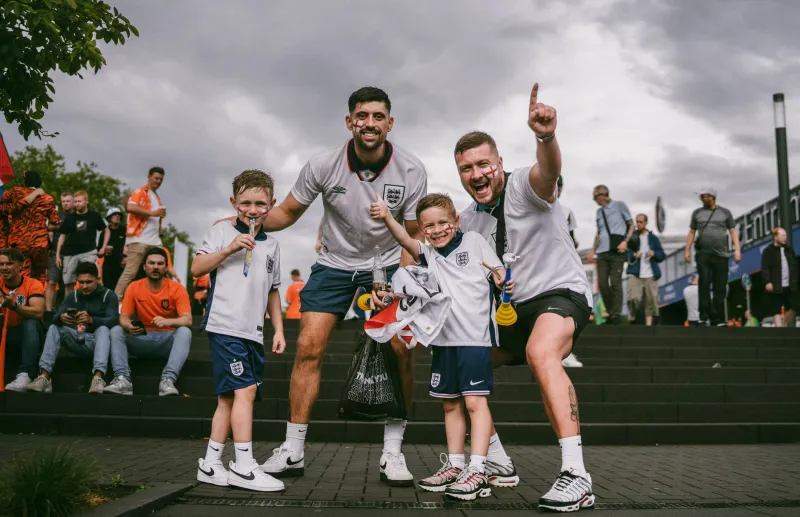
There is a corner of every ground where the nickname department never closes. It sits behind the goal, usually near a sticky handrail and a queue for something involving chips. The family stand is not where football's coolest names are invented. It is where the ones that actually stick are tested.
A nickname born in the family stand has already survived the hardest audience in the ground. If a seven-year-old repeats it, and a parent does not immediately shush them, it has a future. By the time the rest of the ground catches on, the name has usually been through a full season of juice-carton scrutiny.
The Mishearing That Becomes a Chant
Children do not hear names the way commentators do. They hear shapes and sounds, then make something easier to say. That is how a squad list becomes a set of characters.
'Wazza' is the classic case. Wayne Rooney arrived as a teenage striker with a proper name and left as a terrace word. Nobody in an official press release ever needed to put 'Wazza' on a teamsheet, but the family stand understood the assignment immediately. It was warm, a bit daft and easy to shout. The same goes for 'Lamps' and 'Stevie G' — names that sound like they were shortened by a kid pulling on a parent's sleeve rather than by a sub-editor.
'Crouchy' is another one. Peter Crouch was never going to be a nickname-free zone, but the family-friendly version did a lot of heavy lifting. It sat comfortably alongside the robot celebration and the general sense that here was a giant who did not take himself too seriously. The family stand likes a nickname that gets the joke before the joke has to be explained.
The Diminutive Economy
There is a whole economy of nicknames based on making a long name shorter. It is not lazy. It is practical. Try teaching a five-year-old to chant 'Georginio Wijnaldum' at speed. 'Gini' was always going to win.
The same pattern explains why Roberto Firmino became 'Bobby' in so many mouths. It is not his name, but it is a nickname that sounds like it belongs on a birthday card. Son Heung-min became 'Sonny' — a word that already sounds like it should be on a flag. Aaron Ramsdale became 'Rammers'. These are names built for repetition, the kind of thing a child can shout while holding a hot chocolate.
This is where the family stand quietly outperforms the marketing department. A club can print a nickname on a scarf, but it cannot make it feel natural. 'Gini' feels natural. A made-up badge slogan rarely does.
The Accidental Pun Test
The family stand is also the place where a pun gets its innocence checked. If a name makes a child laugh without needing a backstory, it has a chance.
'One Size Fitz Hall' is not a family-stand chant in origin, but it is exactly the sort of line a seven-year-old would approve of: a defender's name turned into a joke about a hat. The same goes for the various 'Zat Knight' wordplays that have drifted around terraces for years. These are not sophisticated gags. That is the point. A good terrace nickname often sounds like it was written by someone who has just discovered that words can be silly.
The family stand does not need the joke to be clever. It needs it to be repeatable. That is why a nickname born there can survive longer than a more polished one launched with a graphic and a hashtag. The polished one has to be explained. The family-stand one has already been explained by a child to a grandparent, badly, and still got a laugh.
Why the Family Stand Beats the Brand Team
Official branding wants a nickname to do a job. It wants the name on a shirt, a social post, a family fun day. That is fine, but it makes the nickname feel like it has been hired.
Family-stand nicknames are not hired. They are overheard. They arrive from the least self-conscious part of the ground, where nobody is worried about looking cool. A parent might say 'go on, Bobby' because it is easier than the full name. A child might say 'Rammers' because it is fun. A few rows later, someone else picks it up. By the next home game it has travelled.
That is why these names outlast official branding. They are not trying to sell anything. They are just trying to get through a cold Tuesday night with a bit of warmth. The club can put a nickname on a banner, but it cannot put it in the family stand's mouth. The family stand puts it in the club's mouth.
The Away End Learns the Words
A family-stand nickname has one final test: does it travel? The away end is a ruthless language exchange. If a name is too cute, too forced or too obviously manufactured, it dies in the coach park.
But if a name has the right rhythm, it crosses over. 'Wazza' travelled. 'Lamps' travelled. 'Crouchy' travelled. They did not need a campaign. They needed a few thousand people who had already heard them in the softer parts of the ground and were happy to pass them on.
This is the quiet power of the family stand. It is not the loudest part of the ground, but it is often the earliest. It gets the nickname before the chant, before the flag, before the club shop notices. By the time everyone else is singing it, the under-tens have moved on to something else — probably a pun about a throw-in.
What It Says About Us
Football nicknames are usually described as terrace creations. That is only half true. A lot of them are family creations first: misheard names, shortened names, accidental puns and the kind of jokes that only work if you are not trying to be clever.
The family stand reminds us that coolness is not the point. Repetition is. Warmth is. A nickname sticks when it sounds like it belongs to the people saying it, not to the people selling it. And the people saying it are often the ones who have not yet learned that football is supposed to be serious.
So next time a whole ground sings a name that started as a child's mispronunciation, remember where it came from. The badge may be on the shirt, but the nickname was probably born in the seats where the hot chocolate is still lukewarm and nobody is pretending not to care.