Pints, Puns and a 10am Kick-Off: The Unbeatable Naming Rights of Sunday League
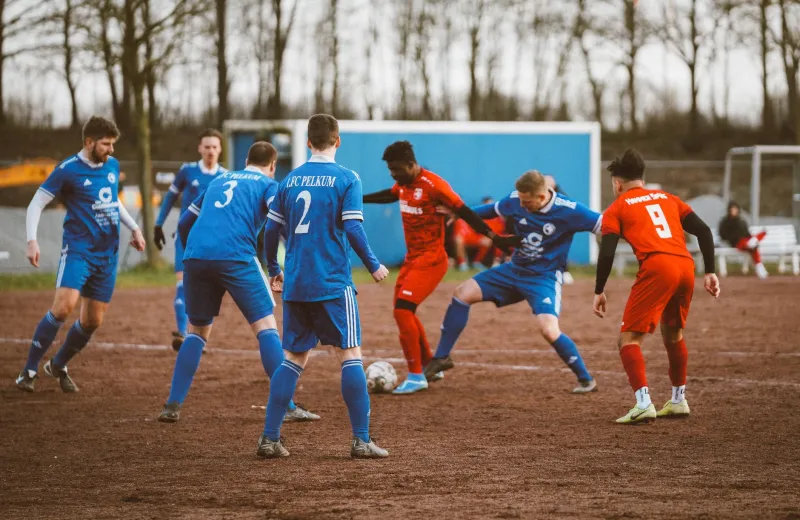
There is a particular kind of magic in seeing a fixture list that reads: Real Ale Madrid vs Inter Ya Nan, 10.30am, pitch three, referee to be confirmed. No broadcaster. No tunnel cam. Just two teams of vaguely hungover adults, a dog that has wandered on from the adjacent park, and a name that somebody came up with in a group chat at 1am and nobody has been allowed to forget since.
Professional football nicknames are carefully managed things. They get focus-grouped, trademarked, and occasionally argued about by people in glass offices. Sunday league names get approved by a bloke called Kev who runs the local league and mostly cares that the entry fee has cleared. That is not a weakness. It is the whole point.
The last corner of football where nobody is watching the trademark lawyer
Amateur football is the only place left where a team name can be a pure, unfiltered joke. There is no marketing department to ask whether the name ‘travels well’. There is no risk that a club shop will have to shift unsold scarves with a pun on them. The only gatekeepers are the league secretary and the chap who orders the kit, and the latter is usually the same person who suggested the pun in the first place.
That freedom produces names you would never see in the professional game. Food-and-drink wordplay is a rich seam: Tea and Busquets, Chicken Tikka Mo Salah, Boca Seniors (a veteran side, naturally). Film and TV hybrids have their own hall of fame: Dyslexia Untied, Cesc and the City, The Neville Wears Prada. And then there are the local legends — the pub teams, the works sides, the Sunday morning institutions whose names have outlived the breweries that inspired them.
What links them all is that they are in-jokes first and football teams second. And that is exactly why they stick.
Why the name does more work than the warm-up
In amateur football, the nickname is the identity. There are no training-ground tactics boards, no set-piece coaches, no data analyst. There is a name on a league entry form, and by week three that name is on a WhatsApp group, a set of £9.99 training bibs, and a match report in the local paper that reads: ‘Inter Ya Nan were undone by a second-half header from a man who had to leave early for a Christening.’
The name recruits players. Nobody joins a team called ‘FC Athletic’ because they saw the name and thought: I want a piece of that. But a team called Real Ale Madrid? That promises a certain lifestyle. It tells you the warm-up will be short, the post-match will be long, and the team photo will feature at least one can of lager. The name is the first team talk. It sets the tone before a ball is kicked, and it gives a group of strangers an instant shared language.
It also gives referees something to work with. There are match officials up and down the country who have had to announce ‘Inter Ya Nan’ with a straight face at kick-off. Some have mastered it. Some have refused. Either way, the name has done its job: it has made a cold Sunday morning slightly more entertaining for everyone involved.
The economics of the joke
There is a practical side to this that any Sunday league treasurer will tell you about. Kit printing is charged by the letter. A long, elaborate pun can cost more than the match balls. This is why some of the best amateur names exist only in the league handbook, while the shirts simply say ‘INTER’ or ‘RAM FC’ because the budget ran out. The joke lives on in the fixture list, even if the polyester has had to compromise.
Then there is the local newspaper round-up. Sub-editors love a Sunday league name. A 3-2 win for ‘Dyslexia Untied’ is a gift. A 7-1 defeat for ‘Hardly Athletic’ writes its own headline. The name does half the work for the journalist, and in return the journalist gives the name a tiny bit of immortality in print.
When the gag becomes heritage
The best thing about these names is what happens after a decade. The founder leaves. The original joke is long forgotten — or, worse, only two people remember why it was funny. But the name stays. Changing it would feel like changing the club crest. Nobody wants to be the person who suggests a rebrand of a team that has been called ‘Boca Seniors’ since 2006 and has the trophies to prove it.
That is the quiet beauty of the Sunday league name. It starts as a pun and ends as a tradition. It becomes part of the local football landscape, mentioned in the same breath as the pitch that floods every January and the cafe that does the best bacon rolls. The joke wears thin, then it wears in.
The unwritten rules of Sunday league naming
Every league has its own etiquette, but a few principles seem universal:
- If you have to explain the pun, it can still work — but only if the explanation is funnier than the name.
- Never choose a name you would be embarrassed to shout across a muddy pitch at full volume.
- Sponsors go on the shirt, not in the team name. ‘The Red Lion FC’ is fine. ‘The Red Lion FC sponsored by Dave’s Plumbing and Heating’ is a cry for help.
- One pun maximum. Double puns collapse under their own weight before the first water break.
- If the league secretary laughs, you are in. If the league secretary sighs, you are definitely in.
Send us your worst
We know there are thousands of amateur team names out there that deserve a wider audience. The pub side called ‘Athletico Boozer’. The works team called ‘Pint of No Return’. The youth team whose parents quietly regret letting the kids pick the name. We want to hear them.
Send us the finest terrible pun your club has ever had — the one that still makes you smile when you see it on the fixture list. We will celebrate the best in a future piece. After all, the professional game may have the money and the lawyers, but Sunday league has the naming rights to the funniest corner of football. And long may it stay that way.