The Crest Is Not the Chant: When Clubs Get Their Own Nickname Wrong

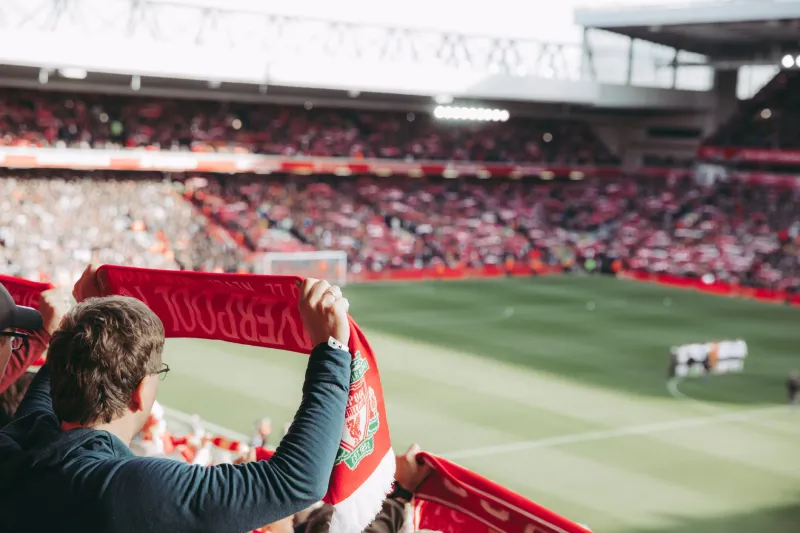
Photo: Samson Ssemakadde, CC0, via Wikimedia Commons
In the club shop, the nickname is a product. On the badge, it is a logo. In the stand, it is something else entirely: a shortcut, a joke, a shibboleth. Most clubs have at least two names — the one printed on the crest and the one bellowed from the back row. Sometimes they match. Often they do not.
The Badge Is a Business Card, the Chant Is a Password
An official nickname has a job to do. It needs to fit on a scarf, sound friendly in a junior membership pack, and survive being translated into a mascot costume. A terrace name has a different job. It needs to fit a song, land a punchline, and tell the person next to you that you belong. One is designed by committee; the other is built by repetition. That is why the two often drift apart.
Sunderland: Black Cats on the Sign, Mackems in the Mouth
Sunderland have leaned into Black Cats for decades — the badge, the merchandise, the matchday branding. It is a clean, licensable identity with a neat origin story. But ask a Sunderland supporter what they are and you may get Mackem, or simply Sunderland. Mackem comes from the shipyards — we mak 'em, you tak 'em — and it carries a local ownership no marketing department can manufacture. Black Cats is the brand. Mackem is the password. Both are real, but only one is shouted at full volume when the team needs a goal.
Everton: Toffees on the Tin, Blues in the Blood
Everton's Toffees is one of the oldest official nicknames in the game, tied to Mother Noblett's toffee shop near the old ground. It is on the badge, in the club song, in the museum. Yet the terrace shorthand is Blues. Come on you Blues fits the metre. Toffees is charming, but it is a story you tell visitors, not a shout you launch at a referee. The club can print Toffees on everything it likes; the crowd will still sing about the Blues.
Crystal Palace: Eagles on the Badge, Glaziers in the Archive
Palace have been the Eagles since the 1970s, a rebrand that stuck because it suited the noise — the chant, the badge, the general sense of flight. But older supporters still remember the Glaziers, a name drawn from the Crystal Palace building and the glass trade. The Glaziers is history; the Eagles is the brand. Neither is wrong, but only one gets sung. The club chose the Eagle because it was modern and marketable. The crowd kept the older name alive because it was theirs.
Ipswich: The Wind-Up That Became a Brand
Not every mismatch is a failure. Tractor Boys started as a dig from rival fans, a rural stereotype aimed at Suffolk. Ipswich supporters took it, turned it, and the club eventually put it on the website. That is the rare case of a terrace name being adopted from above — but note the direction of travel. It went from the stand to the boardroom, not the other way round. The club did not invent it; it surrendered to it. That is usually how these things work.
Why the Stand Always Wins
A nickname lives or dies on three things: brevity, singability and ownership. Black Cats is three syllables and a bit of a mouthful after a few pints. Mackem is two and lands like a dart. Toffees is lovely, but Blues is a noise you can sustain for ninety minutes. Eagles works on a badge; Glaziers works on a history podcast. The crowd picks the name that does the most work with the least effort.
There is also the question of who the name belongs to. A marketing team can launch an alias, but it cannot make it feel earned. Supporters can smell a slogan. They know when a nickname has been workshopped within an inch of its life. The ones that stick are usually the ones that arrived sideways — a joke, a local trade, a rival's insult that was too good to waste.
What the Crest Can't Do
None of this means official nicknames are pointless. Clubs need a clean identity for sponsors, kids' shirts and social media bios. A badge with a cat on it sells. But a nickname only becomes real when it survives the walk from the pub to the turnstile. If it needs a press release to explain it, it is already losing. The crest is what the club says about itself. The chant is what the crowd says back. And in the end, the crowd gets the last word.